Showing posts with label prostate cancer. Show all posts

Tuesday, 15 March 2016

23. What is the Cancer risk from processed and red meat?


     As I reported last year on two occasions in this blog, the World Health Organization has made some serious charges that some of our favourite foods lead to cancer risk. Processed meat was classified as a carcinogen, something that causes cancer. And red meat was classified as a probable carcinogen that could lead to cancer. 
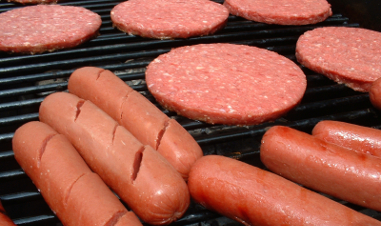
     Processed meat includes hot dogs, ham, bacon, sausage, and some deli meats. It refers to meat that has been treated in some way to preserve or flavour it. Processes include salting, curing, fermenting, and smoking. Red meat includes beef, pork, lamb, and goat.
     Twenty-two experts from 10 countries reviewed more than 800 studies to reach their conclusions. They found that eating 50 grams of processed meat every day increased the risk of colorectal cancer by 18%. That’s the equivalent of about 4 strips of bacon or 1 hot dog. For red meat, there was evidence of increased risk of colorectal, pancreatic, and prostate cancer.
     Overall, the lifetime risk of someone developing colon cancer is 5%. To put the numbers into perspective, the increased risk from eating the amount of processed meat in the study would raise average lifetime risk to almost 6%.
     Colleen Doyle, American Cancer Society managing director of nutrition and physical activity, says, “We should be limiting red and processed meat to help reduce colon cancer risk, and possibly, the risk of other cancers. The occasional hot dog or hamburger is OK.”
     Nutritionists have long recommended a diet that limits processed meat and red meat, and that is high in vegetables, fruits, and whole grains, (see my blog No.12 Mediterranean Diet cuts uterine cancer risk). They recommend choosing fish, poultry, or beans instead of red meat and processed meat. And to refine this further, I suggest wild as opposed to farmed fish, and free range poultry.

Further Reading
National Academy of Sciences, USA. Red meat and Cancer progression.


Tuesday, 16 February 2016

21. Clinical evidence for cancer prevention through diet


     Findings from an Italian study published this month in the American Journal of Nutrition has demonstrated a clear link between the amount of phytochemical-rich polyphenols we eat and mortality from breast, pancreatic, throat, prostate and skin cancers. Phytochemicals are plant compounds, which give vegetables and fruit their pleasing colour, taste and aroma.
     Over 12 years, the joint Italian/Spanish/USA study assessed intake in 807 men and women by measuring their total urinary polyphenol, which could have come from numerous phytochemical-rich polyphenol food sources including tomatoes, tea, broccoli, herbs and spices or even Chianti wine. It showed that those with the highest polyphenol levels had the lowest death rate from cancer and heart disease.
   

Clinical evidence for a dietary benefit after cancer

     Other studies published by the British Journal of Medical Practitioners have shown that the anti-cancer effects of phytochemicals in these polyphenols do not stop after a diagnosis of cancer when combined with other healthy lifestyle habits such as regular exercise.
     Breast cancer survivors eating polyphenol fruit, vegetables, soy and green tea were found to have lower relapse rates.
     Individuals with skin cancer, who had a high intake of leafy green vegetables and broccoli, had lower rates of new cancer formation, while a polyphenol rich diet has been linked to a slower rate of PSA progression among men with indolent prostate cancer.
     A Shanghai Breast Cancer Survival Study has shown a dramatic drop in relapse and death for breast, chronic leukaemia and prostate cancer sufferers with high intake of polyphenols.  Cancer cells have to go through a series of biochemical pathways in order to grow faster, invade adjacent organs and metastasise.
     Laboratory experiments using cancer and normal cells in petri dishes show that some foods can directly inhibit these pathways.  Polyphenols have a direct Stop Cancer mechanism of action via inflammation cellular modulation and signalling events involved in growth, invasion and metastasis. 
     I strongly recommend reading the BJMP article below. Essential reading, it not only gives a summary of the recent studies but also provides a comprehensive list of phytochemicals with notable food rich sources in a variety of fruits, vegetables, grains, pulses and nuts.
Ian MacWatt

Further Reading

British Journal of Medical Practitioners : Phytochemicals in Polyphenols and cancer prevention
Stuart's Kitchen : Recipes for healthy seasonal Mediterranean Diet produce.